Want to work for Perry? We're hiring! Apply online today or call us with any questions.

Perry is looking for our next Office Manager! Apply online today or call us to apply.
Want to work for Perry? We're hiring! Apply online today or call us with any questions.
Perry is looking for our next Office Manager! Apply online today or call us to apply.

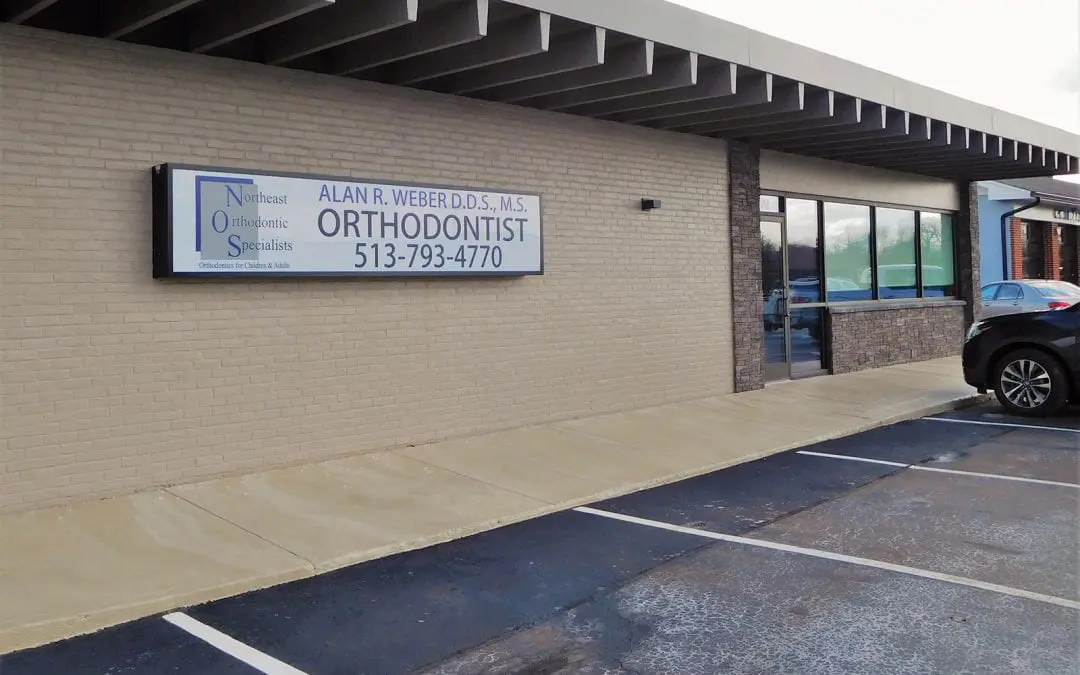
A dental practitioner wants a clean, professional, up-to-date office, and that office should be convenient for patients to reach. Beyond that, you probably want to think very little about the building itself and focus on doing your best work for your patients. Picking the right geographic location is important to your business, and that task is best suited to a knowledgeable commercial real estate agent. Once you have settled on an area, evaluating the buildings and spaces available for your practice is the next step, and it matters just as much. This article is a reference for that second step. Here we will address spaces in strip centers. In the next article, we will cover spaces in multi-tenant, multi-story buildings.
Strip centers appeal as a location for a dental practice for a few reasons. They usually offer convenient and ample parking, though you should check availability at different times of day. They almost always provide barrier-free access to tenant spaces, which makes it easy for patients with disabilities to enter your office. New patients may also discover your practice while visiting other tenants in the center. If a strip center is the right fit, there are important considerations to keep in mind while you review the space, because missing them could mean signing a lease you regret for years. The list below is not exhaustive, but it covers the questions that matter most when choosing a dental office space.
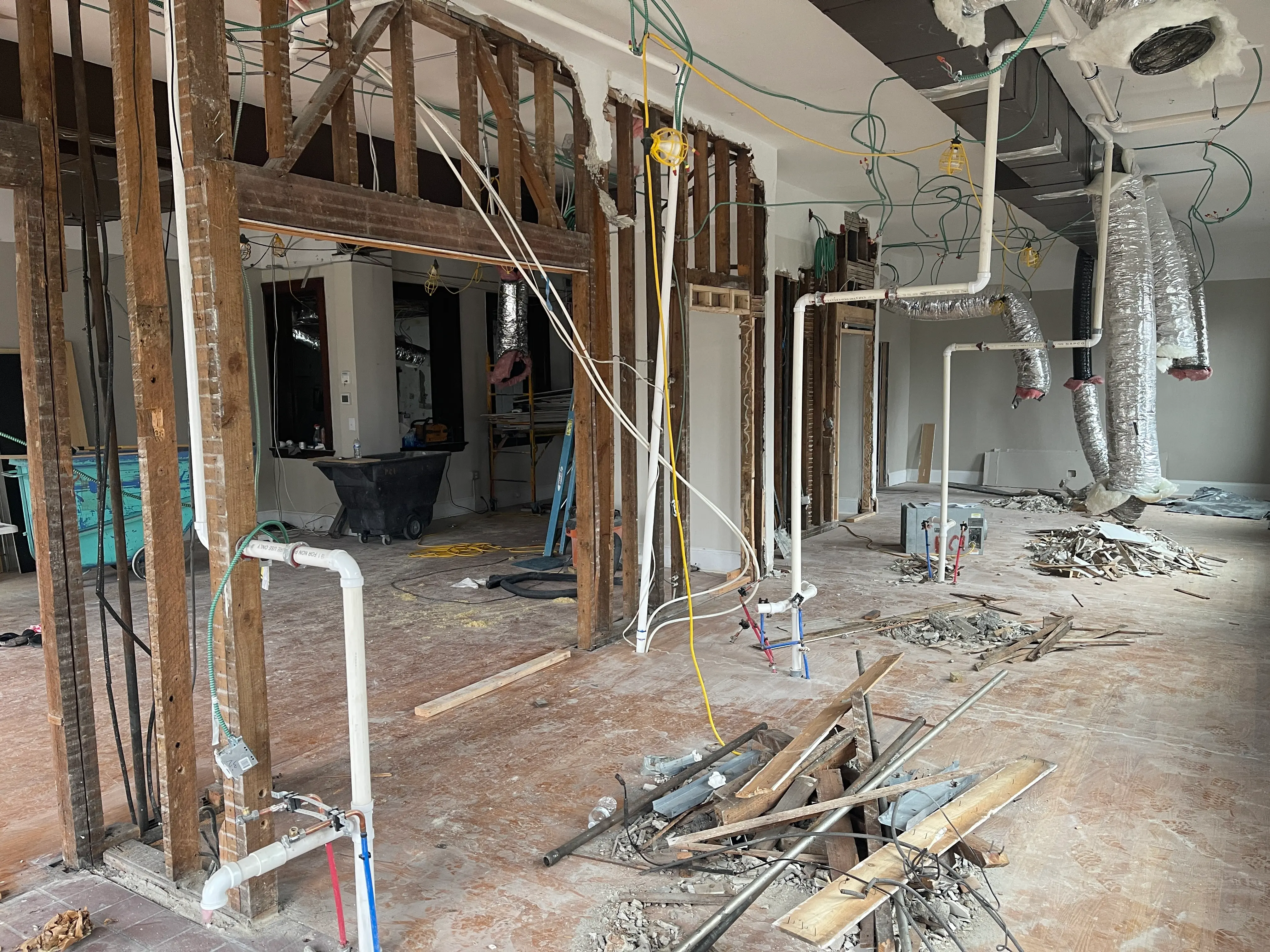
The heating and cooling system is one of the first things to evaluate, because dental office HVAC requirements can carry real cost if the equipment is aging or absent. Ask whether the units are nearing the end of their useful life. If they are, you may want to negotiate that the landlord install and warranty new units. At a minimum, you will know you are facing a replacement expense soon and may be able to reduce your lease rate to compensate.
Ask whether the cold-air returns are ducted. If they are, PVC pipe can be used for plumbing vent lines, which is a construction cost savings, and ducted returns also reduce sound transmission. Then confirm whether the space has heating and cooling equipment installed at all. Consider one case of buyer beware. A client engaged us to build out their space in a newly constructed strip center. While visiting the site, we discovered the landlord had installed no HVAC systems other than a small temporary heater to keep the sprinkler line from freezing. We asked whether our client knew they would have to provide their own HVAC equipment, and that this equipment would have to remain with the building when they moved out. They did not know, and they were shocked to learn they would spend an additional $15,000 on what a landlord typically provides. They had already signed the lease and had no bargaining power left.
Dental equipment places real demands on power, so dental office electrical requirements deserve a close look before you sign. Ask whether the facility still has Romex wiring that may need to be removed and replaced to meet code. Confirm that the electric service size and panel size are adequate for your practice. Check whether the panel is a type that still has breakers available for it, because an obsolete panel can be an unexpected expense.
Plumbing is the next system to review. Confirm that the incoming water service is sized to meet your requirements. Check whether the water service already has a backflow preventer, because if it does not, one will have to be installed. Look for PVC pipe above the ceiling, since PVC costs less than copper or cast iron and, if it is already in use, can likely serve any new piping your renovation requires. Finally, ask the neighboring tenants whether the building has a history of sewer issues.
Several conditions beyond the major systems affect comfort, cost and patient experience. Confirm whether the storefront glass is insulated, because uninsulated glass leaves the front of your space cold and prone to icing in winter. Check whether the demising walls between your space and your neighbor extend to the roof deck, which matters for both security and sound, and whether those walls are insulated to reduce noise. Consider the nature of the businesses on either side and whether noise from them could reach your patients during a visit. Look for a rear access door, which is convenient for deliveries during business hours and may lead to staff parking. Confirm whether the space is separately metered for gas, electric and water, or whether the landlord will charge for those utilities on a square-foot basis.
Keeping these considerations in mind while you review potential homes for your practice will help you secure a space and a lease rate that make sense for your business. The next article in this series covers what to investigate when your preferred space sits in a multi-tenant, multi-story office building.
Start with the three systems that carry the most cost risk: HVAC, electrical and plumbing. Confirm the age and adequacy of the HVAC equipment, whether the electrical panel and service can support dental equipment, and whether the water service is properly sized and protected by a backflow preventer. Then review demising walls, utility metering, storefront insulation and the businesses next door. An experienced dental contractor can walk a space with you and flag these conditions before you commit.
Ask who is responsible for HVAC equipment and whether it stays with the building, whether the electrical service and panel are adequate, whether the plumbing has a backflow preventer, whether the space is separately metered and whether the building has a history of sewer problems. The answers affect both your build-out cost and your monthly operating expense, and they are far easier to negotiate before you sign than after.
Costs vary by space, but the surprises usually come from systems a landlord did not provide or that no longer meet code. We have seen tenants face a $15,000 HVAC bill they did not budget for because equipment was never installed, along with electrical panel replacements and backflow preventer installations. Identifying these conditions before you sign lets you negotiate them into the lease or plan for them in your build-out budget.
Perry Contracting delivers dental spaces across Greater Cincinnati that are built for precision and long-term performance. If you are evaluating a space for your practice, bring us in before you sign so you can move forward with a clear picture of the work ahead. Get started today.